
LatAm Nearshoring Logistics: Optimizing Your Miami Supply Chain Hub
09/25/2026
Shifting production from Asia to Latin America requires a highly strategic supply chain. LatAm nearshoring logistics helps US importers reduce transit times and maintain predictable inventory levels across domestic markets.
Centralizing your import operations through a Miami supply chain hub connects regional manufacturing directly to your distribution network. This approach supports faster fulfillment and protects your margins.
Assess your current import network and discover how centralizing nearshoring operations in South Florida accelerates your distribution strategy today.
Companies are moving manufacturing closer to the United States to avoid the extended lead times of transpacific shipping routes. Relying on distant suppliers exposes your inventory to complex global disruptions. Sourcing goods from Latin America provides structural resilience and keeps your retail supply chain agile.
According to the Federal Reserve Bank of Dallas, shifting global trade patterns have recently elevated regional partners like Mexico to the top position for total US trade volume. This shift requires importers to rethink their primary distribution gateways.
Ocean freight from Asia takes weeks to arrive at American ports. Transit times from Central and South America to Florida take only a few days. Shorter transit windows allow procurement directors to order inventory exactly when consumer demand spikes.
Global trade faces continuous volatility. By sourcing products closer to home, you reduce the physical distance your cargo must travel. This reduced distance lowers exposure to extreme weather events, fuel price surges, and complex port congestion across multiple international borders.

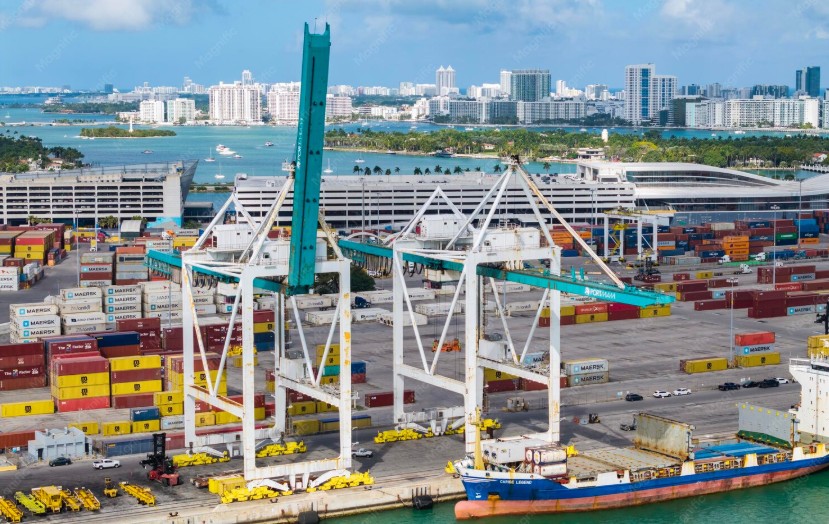
Geographic positioning dictates the speed of your regional trade strategy. Miami serves as the primary commercial gateway connecting Latin American manufacturers with North American consumers. Routing your imports through South Florida provides direct access to mature logistics infrastructure.
PortMiami handles massive volumes of regional ocean freight daily. The terminal infrastructure supports rapid container discharging, allowing certified drayage partners to extract your cargo quickly. Faster extraction keeps your supply chain moving and protects your baseline operational budget.
Miami International Airport (MIA) handles the highest volume of air freight arriving from Latin America. When dealing with high-value electronics or urgent medical supplies, MIA provides the daily flight frequencies necessary to keep your inventory flowing on regular schedules.
Restructuring your procurement network provides significant financial advantages. When you combine regional manufacturing with a consolidated Miami distribution hub, you protect your working capital from excessive overhead expenses.
Transferring cargo into a domestic trailer near the port keeps the marine equipment inside its free-time window and moves the inland leg onto standard domestic trucking rates. Applying specific technical strategies upon arrival solves this challenge.
Transferring cargo from ocean containers to domestic trailers directly at the port reduces overhead. Read our technical breakdown on What Is Transloading and How It Saves Importers Money to understand how this strategy accelerates last-mile distribution across the country.
Managing commercial imports requires strict adherence to federal guidelines. The United States Customs and Border Protection (CBP) enforces specific regulations for goods entering from Latin America. Accurate documentation supports predictable delivery windows.
Your commercial invoices must display the exact purchase price and detailed product descriptions. Assigning the correct Harmonized Tariff Schedule (HTSUS) code determines your exact duty rate. Working with experienced professionals supports the correct legal duty rate.
Submitting your Importer Security Filing early allows CBP to pre-clear standard shipments. Pre-cleared containers are ready for immediate extraction the moment the vessel discharges its load at the Miami terminal.
Different countries specialize in different manufacturing sectors. A LatAm nearshoring logistics strategy often involves sourcing materials from multiple regional partners simultaneously. Centralizing these various inbound flows in Miami simplifies your entire physical distribution model.
| Origin Country | Common Commercial Exports | Primary Logistics Mode to Miami |
| Mexico | Automotive parts, electronics | Ground / Ocean Freight |
| Colombia | Textiles, apparel, cosmetics | Air Cargo / Ocean Freight |
| Costa Rica | Medical devices, agriculture | Air Cargo / Ocean Freight |
| Dominican Rep. | Footwear, medical instruments | Ocean Freight (Short Sea) |
Juggling separate companies for ocean freight, customs clearance, and warehouse distribution introduces coordination risks. When your freight forwarder does not communicate with your drayage carrier, ca forwarder in direct contact with the drayage carrier moves cleared containers off the terminal inside free time. Discover 5 red flags hiring an ocean freight forwarder in Miami.
Centralizing your LatAm nearshoring logistics under a single partner removes administrative friction. Discover the hidden danger of fragmenting your supply chain with too many logistics providers to protect your delivery timelines. Unified management gives your team direct visibility and control over the supply chain flow.
Operating a private facility involves ongoing expenses that stretch beyond monthly rent. Leveraging a third-party partner provides scalable capabilities without the rigid fixed overhead.
If you are expanding your footprint, learn exactly why Miami is the best US logistics hub for LatAm importers. Utilizing certified warehouse infrastructure provides the agility necessary to handle fluctuating seasonal demands from your regional manufacturing partners.
The right logistics partner makes advanced distribution infrastructure immediately operational without the capital investment of building it from scratch. Implementing LatAm nearshoring logistics through Miami shortens transit times and supports agile retail growth. Centralizing your supply chain with a certified provider protects your working capital and supports consistent global delivery performance.
Moving manufacturing from distant regions to Latin America to shorten supply chains and accelerate United States market entry.
Miami provides direct ocean and air connectivity to Latin America, functioning as the primary distribution gateway for the region.
It helps reduce costs by shortening transit routes, minimizing inventory holding times, and avoiding expensive global shipping rates.
KCE coordinates your regional imports through our certified warehouse infrastructure in Hialeah to support your steady distribution.
At KCE Logistics, we manage LatAm nearshoring logistics from our certified hub in Miami. Our operations in Hialeah, FL include precise inventory management, regional freight consolidation, and rapid distribution.
Explore our International Freight Forwarding and Warehousing, Distribution & Fulfillment. Talk to our team to find out how KCE supports your strategy.

A technical guide to managing heavy machinery imports using RoRo shipping via PortMiami efficiently.
A guide to optimizing your supply chain through LatAm nearshoring logistics via certified infrastructure in Miami.