
In-House Warehousing vs. 3PL in Miami: Cost Analysis
08/01/2026

Supply chain directors managing growing inventory volumes face a critical financial crossroad. Storing retail goods requires physical space, but locking capital into commercial real estate limits operational agility during fluctuating sales quarters.
Transitioning from private facilities to a 3PL model restructures your baseline expenses. This article analyzes the financial differences between in-house warehousing and third-party partnerships to help you plan your next expansion phase.
This article analyzes the real cost differences between both models and the operational signals that indicate when transitioning to a 3PL makes financial sense.
Managing a private distribution center places the entire operational burden on your internal team. You sign long-term commercial leases, purchase specialized equipment, and coordinate daily labor schedules to keep freight moving.
While this setup offers direct oversight over every single process, it creates rigid financial liabilities. Expanding your footprint means acquiring more square footage, regardless of whether your inventory levels stay consistently high throughout the year.
To maintain daily operations, companies must purchase forklifts, install heavy-duty racking systems, and maintain strict structural safety compliance. These upfront capital investments reduce the budget available for core product development or marketing initiatives.
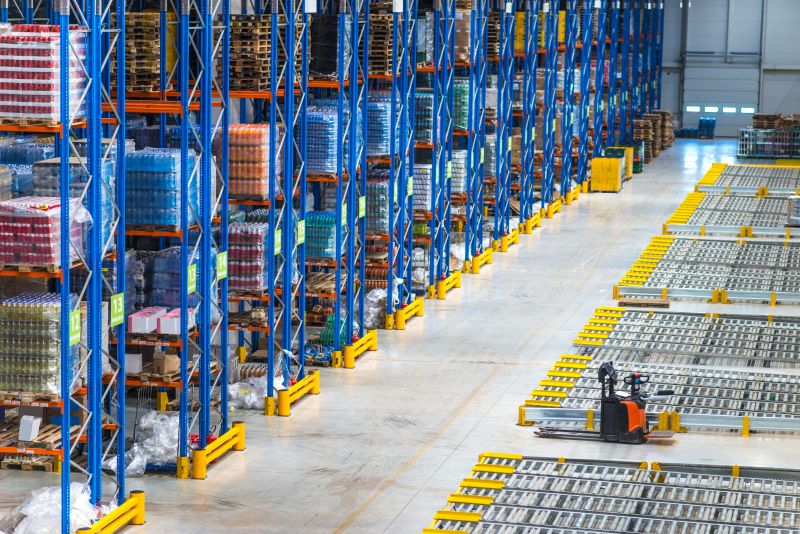
Operating a private facility involves ongoing expenses that stretch far beyond the monthly rent. Supply chain managers often undercalculate the financial burden required to keep a modern facility running smoothly and compliantly.
Industrial real estate prices in South Florida command premium rates. Securing a private warehouse requires significant upfront deposits, regular property taxes, and continuous facility maintenance costs that strain working capital.
A modern warehouse requires heavy machinery and digital infrastructure to function properly. Companies must purchase equipment and license Warehouse Management System (WMS) software to track inventory movements accurately across the floor.
Recruiting, training, and retaining reliable warehouse staff creates constant administrative friction. You must cover base payroll, worker compensation insurance, and overtime pay to process sudden inventory spikes during busy retail quarters.
A Third-Party Logistics (3PL) provider assumes responsibility for your physical distribution network. These operators manage the receiving, storing, picking, packing, and shipping processes through certified warehouse infrastructure.
Partnering with a 3PL changes your financial structure. Instead of paying fixed rent for an empty building during slow months, you only pay for the exact physical space your inventory occupies on a given day.
This shared infrastructure model allows growing brands to leverage enterprise-level logistics capabilities. The provider pools resources across multiple clients to drive down operational costs, passing those structural savings directly to your business.
Geographic positioning dictates your baseline delivery speeds and shipping expenses. Centralizing your operations in South Florida provides distinct advantages for businesses targeting both domestic buyers and international markets.
Operating near PortMiami and Miami International Airport minimizes local transportation distances. Faster container extraction from the port means your inventory hits the storage racks and becomes available for sale much quicker.
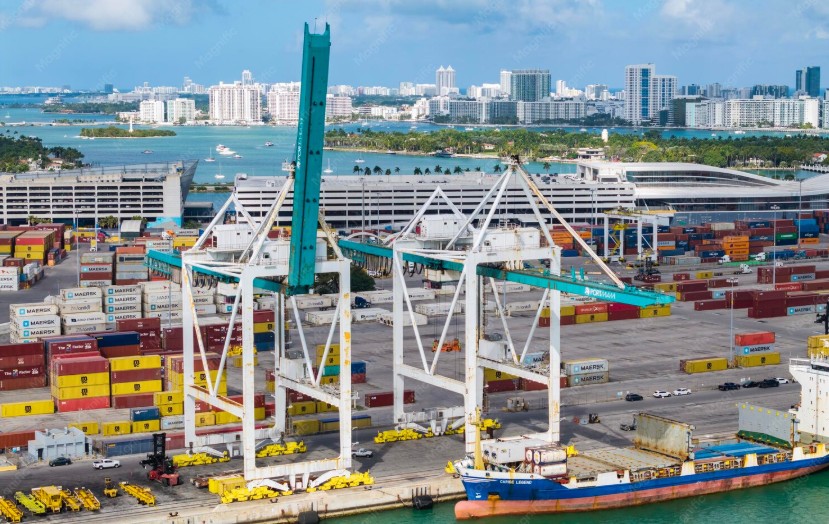
Storing your goods locally helps ensure that regional orders require less transit time and lower postage fees. This proximity allows you to offer competitive shipping rates at checkout, which increases your overall online conversion rates.
For deeper insights into maximizing this layout, review how pallet positions support efficient space utilization.
The core difference between these two models lies in financial adaptability. In-house warehousing relies entirely on high fixed costs, where you pay the exact same rent and base payroll whether your warehouse is completely full or half empty.
A 3PL provider converts these rigid expenses into agile variable costs. You only pay for the exact number of pallet positions you occupy and the specific orders they fulfill.
This financial agility protects your cash flow during slower economic quarters while supporting rapid scalability during peak seasons.
Brands often struggle to identify the exact moment they should abandon their private storage units. Recognizing specific operational breaking points helps you transition before customer satisfaction drops.
If your business experiences sales spikes followed by quiet months, private storage drains your budget. A 3PL allows you to expand your storage footprint during the holidays and shrink it back down when demand normalizes.
When your internal team starts making frequent packing errors due to high order volumes, your system is breaking. Upgrading to a specialized provider restores order accuracy and protects your brand reputation.
To understand how centralizing helps, explore the power of a single partner in logistics.
Consumers expect rapid deliveries. In-house operations often lack the API software required to synchronize inventory levels with online sales channels. This technical gap leads to frustrating backorders and delayed shipments.
Specialized 3PL providers utilize automation to process orders accurately. They synchronize directly with your digital shopping cart platforms, helping ensure that inventory levels update in real-time as soon as a customer completes a purchase online.
These providers also secure discounted shipping rates from major national carriers due to their daily volume. Passing these shipping discounts to your customers increases checkout conversion rates. Understanding why warehouse strategy impacts the entire supply chain clarifies this dynamic.
Managing a private warehouse requires you to assume all liability for physical security and product safety. Implementing a robust security apparatus involves hiring dedicated guards, installing closed-circuit cameras, and managing access control systems.
A specialized logistics partner integrates commercial-grade security protocols across their certified warehouse infrastructure. This includes continuous monitoring and strict visitor logs to protect your inventory from theft or tampering.
Storing specific items, such as medical devices or food products, demands strict regulatory adherence. Experienced operators maintain the necessary certifications to keep your products compliant with federal storage guidelines.
Final-mile shipping often represents the most expensive leg of the supply chain. When operating an in-house facility, you must negotiate directly with parcel carriers based on your individual shipping volume.
Third-party logistics providers aggregate the shipping volume of dozens of clients. This pooled leverage allows them to negotiate favorable dimensional weight pricing and lower base rates with national carriers.
These structural cost reductions lower your total cost per order. Evaluating these metrics helps determine if moving away from private facilities benefits your long-term growth strategy.
The right fulfillment partner in Miami makes advanced distribution infrastructure immediately operational without the capital investment of building it from scratch. For importers, distributors and eCommerce brands managing growing volumes, converting fixed overhead into variable costs protects working capital and gives the operation the flexibility to scale.
It is a logistics model where a company buys or leases a private facility, directly managing the building, equipment, and internal staff.
A 3PL partner handles external storage, order packing, and shipping processes, sharing facility resources across multiple client accounts.
For most operations managing variable volumes, a 3PL converts fixed overhead into variable costs, meaning you pay for the space and labor you actually use rather than maintaining a facility at a fixed cost regardless of volume.
Look for certified warehouse infrastructure, real-time inventory visibility, FDA or GDP compliance if your cargo requires it, and a dedicated team with direct accountability. KCE Logistics operates all of these from our certified hub in Hialeah, FL.
At KCE Logistics, we manage scalable storage and distribution from our certified hub in Miami. Our operations in Hialeah, FL include precise inventory management, order fulfillment, and dedicated space optimization.
Explore our International Freight Forwarding, Warehousing, Distribution & Fulfillment, and Specialized Cargo Solutions.
Talk to our team and find out how KCE supports your warehousing strategy.


A technical guide to managing heavy machinery imports using RoRo shipping via PortMiami efficiently.
A guide to optimizing your supply chain through LatAm nearshoring logistics via certified infrastructure in Miami.