
Choosing how to transport your goods is not merely an operational task; it is a fundamental financial and strategic decision. A well-executed Freight Mode Selection Strategy can be the difference between efficient supply chain performance and unnecessary operational costs. In today’s global landscape, where agility and sustainability are as important as cost, understanding the nuances of each transport mode is indispensable for any supply chain leader.

Many companies make the mistake of viewing mode selection as a purely logistical choice based on the lowest quote. However, the chosen mode directly impacts working capital, customer satisfaction, and product integrity. A solid strategy allows a company to remain resilient against disruptions, such as port strikes or climate events, ensuring that the flow of goods remains coordinated even when market conditions shift. By aligning transportation with business goals, logistics transforms from a cost center into a value driver.
The primary dilemma in any Freight Mode Selection Strategy is the trade-off between cost and time. Generally, the faster the transport, the higher the unit cost.
Air freight is the pinnacle of speed in international logistics. While it is the most expensive mode, it plays a vital role in specific strategic scenarios.
Furthermore, air freight reduces inventory-in-transit exposure, as products spend significantly less time idle, freeing up capital faster.
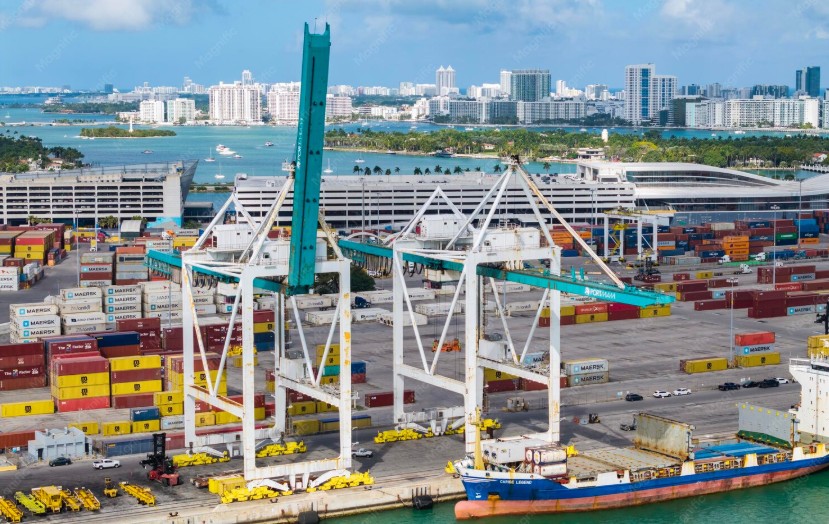
For the vast majority of global trade, ocean freight remains the backbone of the supply chain. It is the logical choice for businesses seeking economies of scale.
The key to success here is lead-time management. Since transit times are long (20 to 45 days), inventory management must be carefully aligned to avoid stock disruptions.
While sea and air connect continents, road and rail connect distribution centers to the end customer.
Not every cargo is suitable for every mode. Your Freight Mode Selection Strategy must evaluate the physical and regulatory nature of the goods:
Multimodality is the use of two or more transport modes within a coordinated logistics strategy. A common example is the “Sea-Air” model: cargo travels by sea from an Asian port to a hub such as Dubai and then continues by air to Europe or the Americas.
This approach provides a balance between the lower cost of ocean freight and the speed of air transport, often reducing costs compared to full air freight while significantly shortening transit time compared to ocean-only routes.
Today, mode selection is no longer based on intuition alone. Data analytics and Artificial Intelligence (AI) allow companies to make more informed logistics decisions:
An effective Freight Mode Selection Strategy is not static; it must evolve as the market conditions and your operational requirements change. By balancing cost, speed, and sustainability, and utilizing technology to support decision-making, companies can transform logistics from a necessary expense into a powerful strategic advantage. The secret lies in disciplined analysis and agile execution.
It is the strategic process of choosing the most suitable transport method (air, sea, road, or rail) to move goods, aiming to optimize costs, lead times, and cargo integrity.
Generally, ocean freight (FCL) is the cheapest for large volumes. However, the total cost of ownership must consider inventory holding costs and transit time.
Air freight is typically chosen when speed is critical, when cargo has high value relative to its weight, or when avoiding stock disruption justifies faster transit.
Modern systems (TMS) analyze real-time logistics data to support mode selection decisions and help anticipate factors such as weather disruptions or port congestion.
Avoid inefficient shipping decisions and build a more structured logistics strategy. At KCE Logistics, we support companies in aligning transportation planning with operational performance.
Explore our Warehousing, Distribution & Fulfillment, International Freight Forwarding, and Specialized Cargo Solutions: Our team can help evaluate your freight strategy and identify opportunities to improve cost efficiency and coordination.
Contact us today to streamline your global logistics!

A guide to optimizing your supply chain through LatAm nearshoring logistics via certified infrastructure in Miami.

Navigating international trade requires precise documentation. Managing US Customs Clearance […]
