
Tariffs, Nearshoring, and the New Case for a Miami 3PL: What US Importers Need to Know
06/12/2026
The macroeconomic landscape in 2026 is forcing supply chain directors to rethink long-established distribution models. Shifting geopolitical tensions and sudden trade policy updates create real operational friction, companies that rely heavily on distant manufacturing hubs are absorbing the impact directly. This article explains how combining nearshoring with a strategic Miami 3PL logistics base protects your margins and builds operational resilience.
For decades, American brands relied on Asian manufacturing hubs for high-volume production. However, rising container rates and persistent trade disputes expose the severe fragility of this single-source strategy. Geopolitical events, much like the recent Middle East conflict disruptions, demonstrate that long ocean lanes remain highly vulnerable to sudden stoppages. For this reason, companies actively seek shorter, more predictable routes to secure business continuity. Moving production closer to home removes thousands of miles of unpredictable transit risk.
The transition toward nearshoring logistics represents a fundamental structural pivot in international commerce. Instead of manufacturing goods across the globe, companies move production to neighboring regions within the Western Hemisphere.
As a result, Latin American manufacturing centers experience rapid development. Businesses that analyze how LATAM companies are expanding into the US understand the competitive necessity of this geographic shift.
New trade policies frequently disrupt established corporate budgets overnight. Indeed, sudden duty increases directly penalize companies that lack flexible sourcing strategies. Higher import fees inflate the total cost of landed goods instantly.
Furthermore, regulatory changes require constant updates to customs compliance protocols. Profit margins shrink rapidly unless businesses optimize their handling overhead. Therefore, building a resilient buffer becomes mandatory to absorb financial shocks.
As sourcing moves significantly to Latin America, the physical entry point into the US must change accordingly. Traditional West Coast ports do not fit this new trade flow efficiently. Therefore, a specialized third-party logistics Miami center becomes an irreplaceable strategic asset for modern brands.
Miami sits at the center of Western Hemisphere trade lanes. Ocean vessels from Colombia, Brazil, and Central America reach Florida significantly faster than northern alternatives.
The city offers seamless connections to extensive rail and interstate networks. This connectivity supports efficient distribution across major East Coast population centers.
Unpredictable trade laws require companies to rethink their lean inventory models. In fact, “just-in-time” delivery fails when borders close or tariffs shift suddenly. To achieve true supply chain resilience, business leaders maintain strategic safety stock closer to their primary consumers.
For this reason, decentralized storage models consistently outperform centralized frameworks in volatile climates.
Storing goods in the US does not mean you must pay high customs duties immediately. Competent logistics hubs leverage specific government frameworks to ease financial pressure on importers. Bonded warehouses delay customs duty collections until the product exits the facility for local distribution. Similarly, Foreign Trade Zones (FTZs) allow companies to defer, reduce, or eliminate tariffs entirely. Consequently, companies optimize their working capital while keeping physical inventory protected on American soil.

Not every warehouse infrastructure can handle the requirements of modern multinational companies. Supply chain directors must look for an 3PL partner in the US that understands macro-level trade shifts. Shippers require providers with customizable high-capacity storage layouts and a flawless compliance track record.
To guide your executive selection process, review the core qualities required for a warehouse partner in the US to safeguard your long-term investments.
Shorter supply chains require faster data synchronization to deliver real value. If your technology cannot track inventory accurately across borders, proximity means very little. Therefore, modern logistics relies heavily on digital automation. Cloud-based Warehouse Management Systems (WMS) feed live order status updates directly into your corporate ERP system. This integration gives management complete transparency over stock levels. To discover how this visibility improves profit margins, explore the benefits of establishing operational control in logistics networks.
Expanding your sourcing footprint often leads companies to hire too many small, uncoordinated vendors. However, juggling multiple customs brokers, drayage truckers, and warehouse operators introduces significant human error. Fragmented networks increase communication dropouts during transit.
Additionally, divided accountability causes finger-pointing when shipments experience delays. Instead, forward-thinking brands manage their nearshoring initiatives through a single source. Consolidating your operations significantly reduces administrative friction. Learn about this strategic asset by reading our guide on the power of a single partner in logistics.
Navigating global trade volatility requires constant adaptability from modern importers. In 2026, sudden tariff updates and geopolitical friction force companies to rethink legacy distribution models. Moving production closer to North America through nearshoring provides an excellent shield against long-distance shipping risks. Ultimately, pairing this geographic shift with a strategic Miami 3PL hub protects your product margins and secures your inventory velocity. Building a resilient logistics network today protects your operation against whatever comes next.
Nearshoring shortens the physical distance between production facilities and consumers, which eliminates long ocean transit risks and reduces fuel surcharge exposure.
Miami provides the fastest maritime transit times and most mature customs infrastructure for trade lanes originating in Latin America.
Yes. Experienced 3PLs utilize specialized warehousing frameworks like FTZs or bonded facilities to defer or reduce import duties.
At KCE Logistics, we operate as a fully integrated partner for importers navigating tariff volatility and nearshoring transitions. From international freight coordination to certified warehousing and B2B fulfillment in Miami, one team manages the entire operation with full visibility and no gaps between vendors. Talk to our team and find out how KCE supports your supply chain strategy in 2026.
To protect your business margins, explore our comprehensive Solutions page. We provide International Freight Forwarding, scalable Warehousing, Distribution & Fulfillment, and tailored Specialized Cargo Solutions.

A technical guide to managing heavy machinery imports using RoRo shipping via PortMiami efficiently.
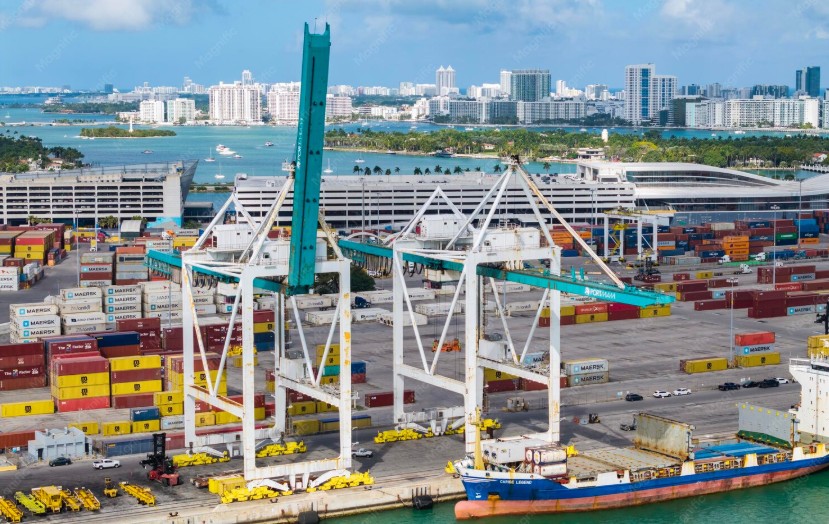
A guide to optimizing your supply chain through LatAm nearshoring logistics via certified infrastructure in Miami.