
Understanding Pallet Positions: The Key to Warehouse Capacity
03/06/2026
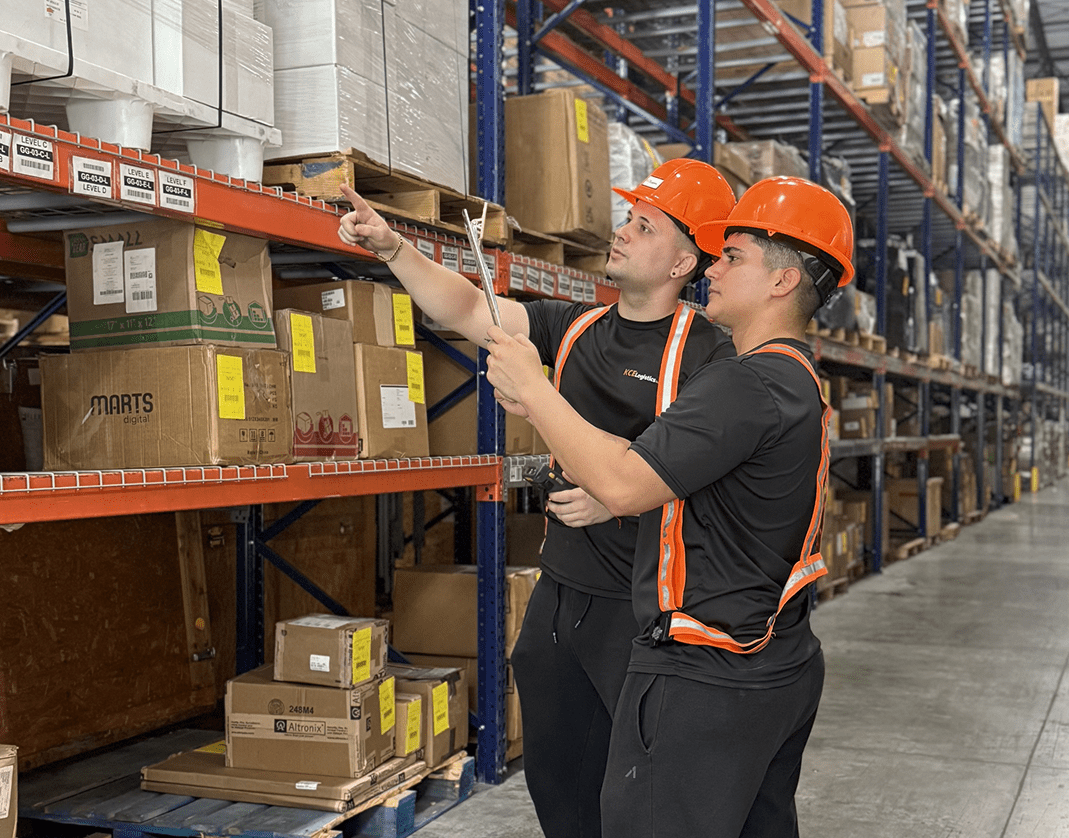
In the world of warehousing and logistics, a pallet position is the fundamental unit of storage measurement. While it may seem like a simple concept, understanding exactly what a pallet position is, and how to optimize it, is the difference between a profitable operation and a logistical bottleneck. A pallet position is the specific three-dimensional space in a warehouse racking system designed to hold one standard pallet.
For businesses utilizing third-party logistics (3PL) or managing their own facilities, the number of available pallet positions dictates the total inventory capacity and directly influences operational costs. It is not just about the floor space; it is about maximizing vertical and horizontal storage density. When you optimize pallet positions, you maximize the ROI of your warehouse real estate and improve overall supply chain performance.
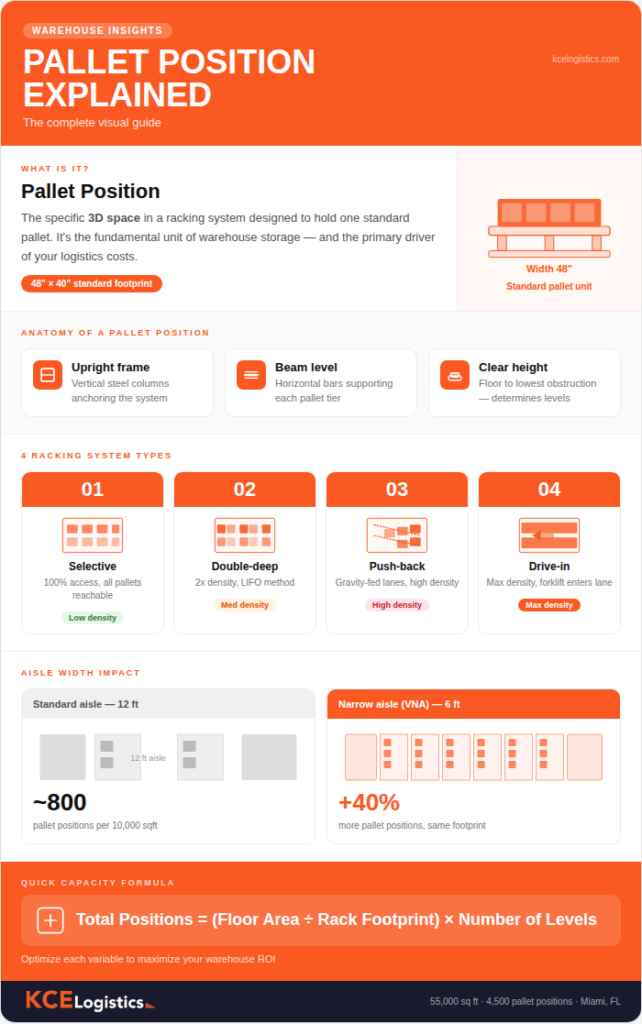
A pallet position is defined by the dimensions of the pallet it is intended to hold, plus the necessary clearance for safe handling. In North America, the standard pallet size (GMA pallet) is typically 40 x 48 inches. Consequently, a standard pallet position must account for these dimensions while providing a few inches of “buffer” space on all sides to allow forklifts to place and retrieve goods safely.
The height of a pallet position is just as critical as its footprint. This is often referred to as the “clear height.” A standard pallet load might stand 48 to 60 inches tall. Therefore, a pallet position in a rack must have enough vertical clearance to accommodate the pallet, the goods, and additional lift space for forklift handling.
You cannot talk about pallet positions without discussing aisles configuration. The number of positions you can fit into a warehouse is inversely proportional to the width. Standard aisles (12 feet) allow for traditional forklifts, while Narrow Aisle (NA) or Very Narrow Aisle (VNA) configurations can significantly increase the total count of pallet positions in the same footprint.
In most 3PL models, pricing is built around the pallet position. Whether you are being charged for “storage per pallet” or “occupied positions,” this metric is the primary driver of your monthly logistics spend.
Even a 5% improvement in pallet position efficiency can generate measurable annual savings in high-volume warehouse environments.
Pallet storage strategy should be aligned with inbound freight planning. Container arrivals, air freight schedules, and customs clearance timing directly affect receiving capacity and rack allocation.
When pallet position planning is disconnected from freight flow, dwell time increases, storage duration extends, and available capacity becomes constrained.
Integrated freight and warehousing coordination improves pallet turnover, reduces congestion at dock doors, and supports more predictable inventory levels.
The type of racking system you choose will determine the density and accessibility of your pallet positions. Depending on your inventory turnover (FIFO vs. LIFO), certain strategies will be more effective than others.
This is the most common system. It provides “100% selectivity,” meaning every pallet position is accessible at any time. While it offers the lowest storage density, it is ideal for businesses with a high number of SKUs and low pallet counts per SKU.
By placing two rows of selective racking back-to-back, you double the pallet positions accessible from a single aisle. This increases density by about 40% but requires specialized deep-reach forklifts and operates on a Last-In, First-Out (LIFO) basis.
These systems allow forklifts to drive directly into the racking lanes. This is the ultimate solution for high-density storage of identical products. It maximizes pallet positions by eliminating aisles, though it significantly limits selectivity.
These are dynamic systems that use gravity to move pallets. Push-back racking is excellent for LIFO storage, while Pallet Flow is the gold standard for First-In, First-Out (FIFO) operations, ensuring that older stock is always at the front of the pallet position.
To calculate the total pallet positions in your facility, you must look beyond the total square footage. The formula involves:
For example, a warehouse with 50,000 square feet might only have 25,000 square feet of actual “storage footprint.” If your racks are 5 levels high, your total pallet positions will be vastly superior to a warehouse that only utilizes floor stacking.
As warehouse operations become increasingly data-driven, the concept of a pallet position is evolving beyond static allocation. Modern Warehouse Management Systems (WMS) use real-time data and movement analysis to assign pallet positions dynamically.
Fast-moving items are prioritized in easily accessible “golden zones,” while slower-moving inventory is strategically placed in higher tiers, improving picking efficiency and overall warehouse flow.
Automated Storage and Retrieval Systems (AS/RS) are also redefining space utilization. By operating with reduced aisle requirements and greater vertical reach, these systems can significantly increase pallet density within the same warehouse footprint.
However, the true impact of automation lies not only in equipment, but in structured planning, accurate data capture, and disciplined execution.
Understanding and optimizing your pallet positions is not just a warehouse task; it is a financial strategy. By maximizing the density of your storage and ensuring that every position is utilized effectively, you reduce overhead, improve order fulfillment speed, and create a more resilient supply chain. Whether you are scaling an e-commerce brand or managing industrial distribution, the pallet position remains the most important metric for measuring your storage success.
A pallet is the physical wooden or plastic platform used to move goods. A pallet position is the specific designated space within a warehouse rack where that pallet is stored.
In the US, it typically accommodates a 40″ x 48″ pallet with additional clearance for safe handling.
Divide your peak inventory volume by the average units per pallet. Always add a 10-15% buffer to account for operational maneuvering and seasonal fluctuations in stock levels.
Clear height is the distance from the floor to the lowest overhead obstruction. It determines how many vertical pallet positions you can stack, which directly impacts your total warehouse capacity.
Avoid underutilized capacity and fragmented storage planning. At KCE Logistics, we transform warehouse operations into structured, high-performance environments.
Explore our Warehousing, Freight Forwarding, and Specialized Cargo Solutions: Our team provides tailored operational assessments designed to improve pallet utilization, strengthen coordination, and enhance overall supply chain performance.
Contact us today to streamline your supply chain!

A guide to transloading services in Miami and how they reduce inland freight and equipment costs.

A guide to structuring your Q4 eCommerce logistics and managing peak season order volumes in Miami.