
Quick answer: how does a 3PL work?
November 16, 2026
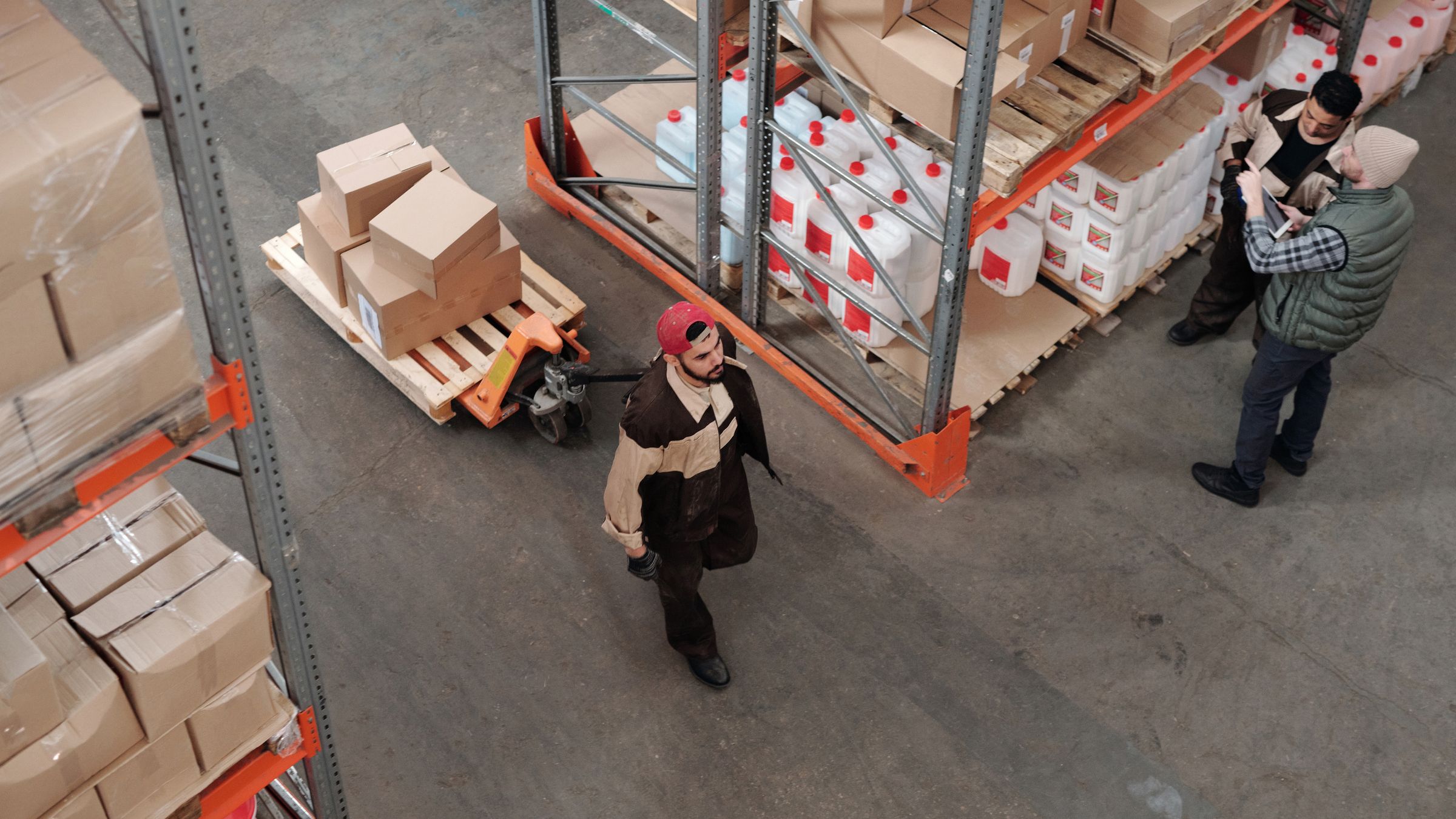
You send your products to a warehouse you have never worked in, and a few days later orders start leaving with your name on the box. What happens in between? How does 3PL work behind the scenes, who touches your stock, and how do you keep control when the goods are no longer in your building? The process is shorter than most people expect, but each step has details that decide speed and cost. Read on to see the full flow, step by step.
This post explains each step in plain English, shows how the systems connect and answers the questions shippers ask most often. It is the fourth post in our November series, after What is a 3PL? and What is a 3PL brokerage? yesterday.
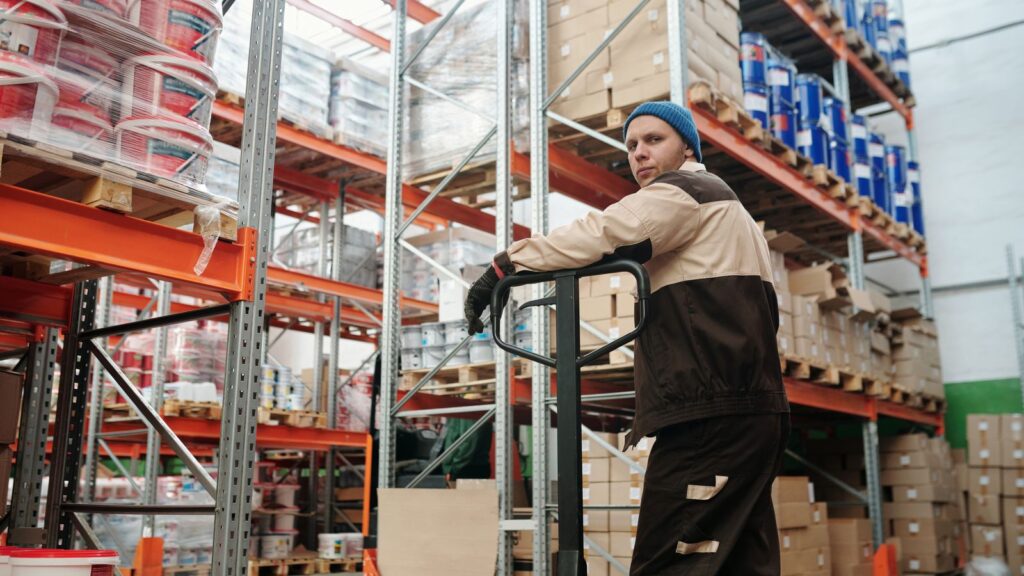
Everything starts with inbound cargo. Before goods arrive, you or your supplier send an advance shipping notice (ASN) that lists what is coming: products, quantities, cartons and expected date. When the truck or container arrives, the 3PL team unloads it, counts the units, compares them with the ASN and records any differences or damage. Many warehouses also take photos at this stage.
Receiving looks simple, but it is the step that protects your inventory accuracy. If units are counted wrong at the dock, every later report is wrong too. That is why good 3PLs scan barcodes during receiving and report discrepancies quickly, often the same day.
For importers, receiving often follows a container’s journey from the port. In Miami, that means drayage from PortMiami or delivery from an airline’s cargo terminal at Miami International Airport to the warehouse. Some goods arrive palletized and ready to store. Others arrive floor-loaded in containers and must be unloaded carton by carton and palletized.
After receiving, the 3PL puts the goods away in storage locations. Each location has an address, such as aisle, rack, level and position, and the WMS records which product sits where and in what quantity. This system is what lets a warehouse find one specific item among thousands in seconds.
Storage formats depend on how you sell:
During storage, the 3PL also runs inventory controls, such as cycle counts, so that the system matches the physical stock.
Fulfillment is what happens when an order arrives. The order may come from your online store, a marketplace, a retailer’s purchase order or your own instructions for an export shipment. The 3PL’s system turns the order into a pick list that tells staff which items to collect and from which locations.
Next comes packing. For e-commerce orders, staff place the items in the right box or mailer, add inserts or packing slips, and seal the package. For retail or export orders, staff build pallets, wrap them, label them and prepare documents. Finally, the 3PL prints shipping labels, hands the packages or pallets to carriers and sends tracking information back to your systems.
Most 3PLs set a daily cut-off time. Orders received before the cut-off ship the same day. Orders received after shipping the next working day. Knowing your 3PL’s cut-off, and how it changes during holidays, is one of the simplest ways to keep customer promises.
The final step is information. A good 3PL gives you a portal or reports with inventory levels, order status, tracking numbers, receiving records and returns. Many also send daily or weekly summaries. This visibility lets you reorder in time, spot slow-moving products and answer customer questions quickly.
Billing follows the same activities. At the end of each period, the 3PL invoices you for receiving, storage, fulfillment, packaging, shipping and any extra services. For a side-by-side cost view, see our comparison of in-house warehousing vs a 3PL in Miami.
Returns run the four steps in reverse. The customer sends the item back, the 3PL receives and inspects it, decides whether it can be resold, and updates inventory. After the holiday peak, returns can become a large part of January workload, so it is wise to agree on the returns process early. We cover this in detail at the end of the month in our guide to reverse logistics.
If you ask a warehouse manager how does 3PL work behind the scenes, the answer will usually start with software. Systems connect the physical work to your business.
The WMS is the core. It records every product, location, movement and order. It directs staff with pick lists and scanning tasks, and it produces the reports you see. When people say a 3PL “has good systems”, they usually mean a reliable WMS used with discipline.
Integrations link the WMS to the outside world. Common integrations include:
Barcodes make every step faster and more accurate. Products, locations, cartons and pallets all carry barcodes, and staff scan them at each movement. Standard product barcodes are managed by GS1 in the United States. If your products do not have barcodes, many 3PLs can label them during receiving as a value-added service.
Some warehouses measure and photograph cargo automatically. This helps with freight quotes, especially air shipments, which are charged on volumetric weight when it is higher than actual weight. It also creates a record of condition that helps with claims.
Many 3PLs, including KCE, also act as freight forwarders. In that case, the four steps extend beyond the warehouse.
The advantage is continuity. The same team knows what is coming, when it will arrive and where it must go next. Fewer handoffs mean fewer errors and faster answers.
A 3PL works best when the client provides good information. These are the most important inputs:
When this information is missing, the 3PL has to guess, and guesses create errors. When it is complete, operations run smoothly.
The four steps are universal. However, location changes the details, and Miami adds a few advantages of its own.
First, inbound cargo arrives from two major gateways. Port of Miami handles ocean containers, and Miami International Airport is the busiest U.S. airport for international freight. As a result, a Miami 3PL works with both ocean and air arrivals every day, often for the same client.
Second, outbound cargo goes in many directions. Some orders go to U.S. consumers and retailers. Others go south to Latin America and the Caribbean as consolidated exports. Therefore, a Miami warehouse often runs domestic fulfillment and export consolidation side by side.
Third, the team works across languages. Suppliers, brokers and buyers may write in English, Spanish or Portuguese. Consequently, a Miami 3PL that works in all three languages reduces errors and speeds up answers.
Finally, Miami’s position makes it easy to switch modes. If a sea shipment is late, part of the order can move by air from the same city. We show the numbers behind these advantages in Why Miami, and we cover what to look for in a local warehouse tomorrow.
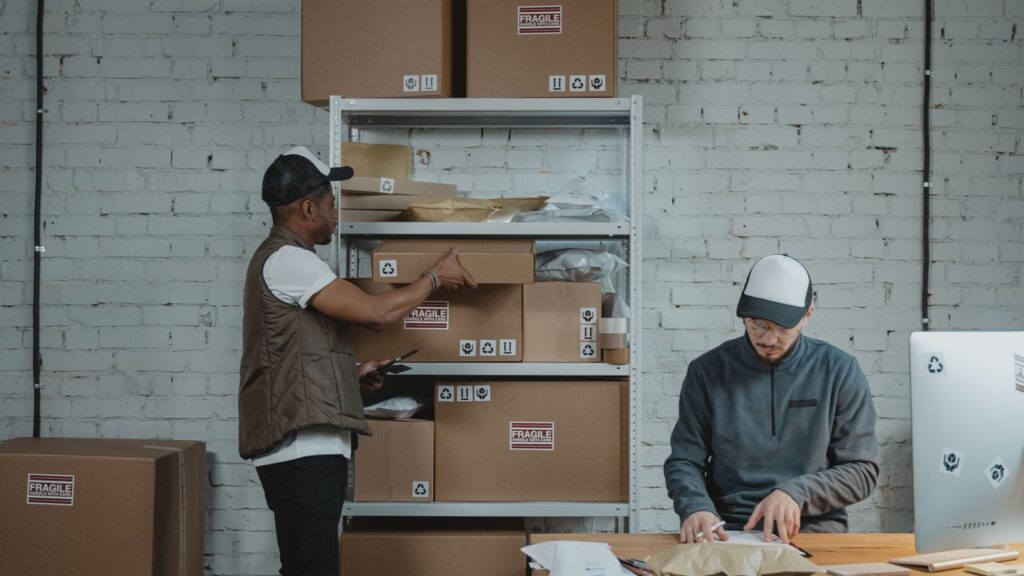
Sometimes the best way to see how a 3PL works is to follow a single order. Here is a simplified timeline for an online order shipped from a Miami warehouse.
9:12 a.m. A customer in Texas buys two products from your online store. The order reaches the 3PL’s system within seconds through the store integration.
9:15 a.m. The WMS checks stock, reserves the two units and adds the order to the next pick wave. A wave is a batch of orders picked together to save walking time.
10:30 a.m. A picker scans the first location, collects one unit, scans it, then moves to the second location. The scanner confirms that both items are correct.
10:45 a.m. At the packing station, a packer scans the items again, chooses the right box, adds your branded insert and seals the parcel. The system weighs the parcel and prints the carrier label.
11:00 a.m. The parcel joins the carrier’s outbound cage. The tracking number flows back to your store, which sends the customer a shipping email.
4:30 p.m. The carrier collects the day’s parcels. Your portal shows the order as shipped, and your inventory now shows two fewer units.
The whole process takes a few hours, and you did not touch the order. That is how a 3PL works when systems, people and cut-offs are aligned. It also shows why accurate product data matters: if one barcode or weight is wrong, the flow stops.
For imported goods, the 3PL process starts before the cargo reaches the warehouse. A 3PL that works with importers usually coordinates three extra steps.
First, it follows the shipment from origin with the freight forwarder, so the warehouse can plan labor and space for the arrival. Second, it coordinates with the licensed customs broker, so that clearance and delivery appointments line up. Third, if the goods go to a bonded warehouse, the 3PL keeps the records needed to show where the goods are and when they leave, because duties apply only when goods enter U.S. commerce.
In practice, this coordination saves days. A container that clears customs on Tuesday can be at the warehouse on Wednesday and on the shelves on Thursday, ready for orders. Without coordination, the same container can sit at the terminal and collect storage charges.
Many shippers ask how does 3PL work financially compared with running their own warehouse. The table summarizes the main differences.
| Topic | In-house warehouse | Working with a 3PL |
|---|---|---|
| Space | You lease and pay for it all year | You pay for what you use each month |
| Staff | You hire, train and manage your own team | The 3PL staffs the operation and adds peak labor |
| Systems | You buy and maintain a WMS and integrations | You use the 3PL’s systems |
| Peak season | You must find extra space and people | The 3PL spreads capacity across clients |
| Control | Full, direct control | Control through contracts, reports and communication |
| Best for | Very large or highly specialized operations | Growing companies, importers, seasonal businesses |
Neither model is right for everyone. However, for most small and mid-sized businesses, the flexibility of a 3PL outweighs the extra control of an in-house warehouse, especially in a year with a strong peak season.
A good 3PL relationship should grow with you. In the first months, most clients ship a limited number of products through one or two channels. Later, they add new products, new marketplaces, retail customers or export markets. A 3PL works best over time when it can add services step by step, such as kitting, retail compliance labeling, pallet distribution or international freight, without forcing you to move to a new provider.
Therefore, ask about the next stage before you sign. Where will you be in two years, and can this partner support that version of your business? If the answer is yes, onboarding once is enough. If the answer is no, plan for the move from the start.
A third-party logistics provider works in four steps. 1. Receive: your goods arrive at the 3PL’s warehouse, where staff count, check and record them. 2. Store: the goods go into storage locations tracked by a warehouse management system. 3. Fulfill: when orders arrive, the 3PL picks, packs and ships them, or prepares pallets and export loads. 4. Report and bill: you see inventory, orders and tracking in real time, and the 3PL invoices you for the services you used. Returns flow back through the same system.
How does 3PL work in simple terms? You send your inventory to the 3PL’s warehouse. The 3PL stores it, ships your orders when they arrive, handles returns and shows you everything in a portal. You pay for the services you use.
A 3PL receives inbound shipments, stores goods, picks and packs orders, ships parcels and pallets, processes returns, counts inventory and reports to clients.
You do. The 3PL stores and handles your goods, but ownership stays with you or your company.
Yes, if it offers international shipping or freight forwarding. Many Miami 3PLs, including KCE, ship to Latin America, the Caribbean and other markets.
A fulfillment center is a type of 3PL facility focused on shipping individual orders, usually for e-commerce. A 3PL can offer fulfillment plus other services, such as pallet distribution, freight forwarding and customs coordination.
Ready to ship?
Need a quote for your next shipment?
Tell us what you are shipping and our Miami team will get back to you with a quote.
You send your products to a warehouse you have never […]

Two companies can quote the same shipment, use the same […]