
3PL logistics news: what a $1 trillion holiday peak 2026 forecast means for your supply chain
November 13, 2026
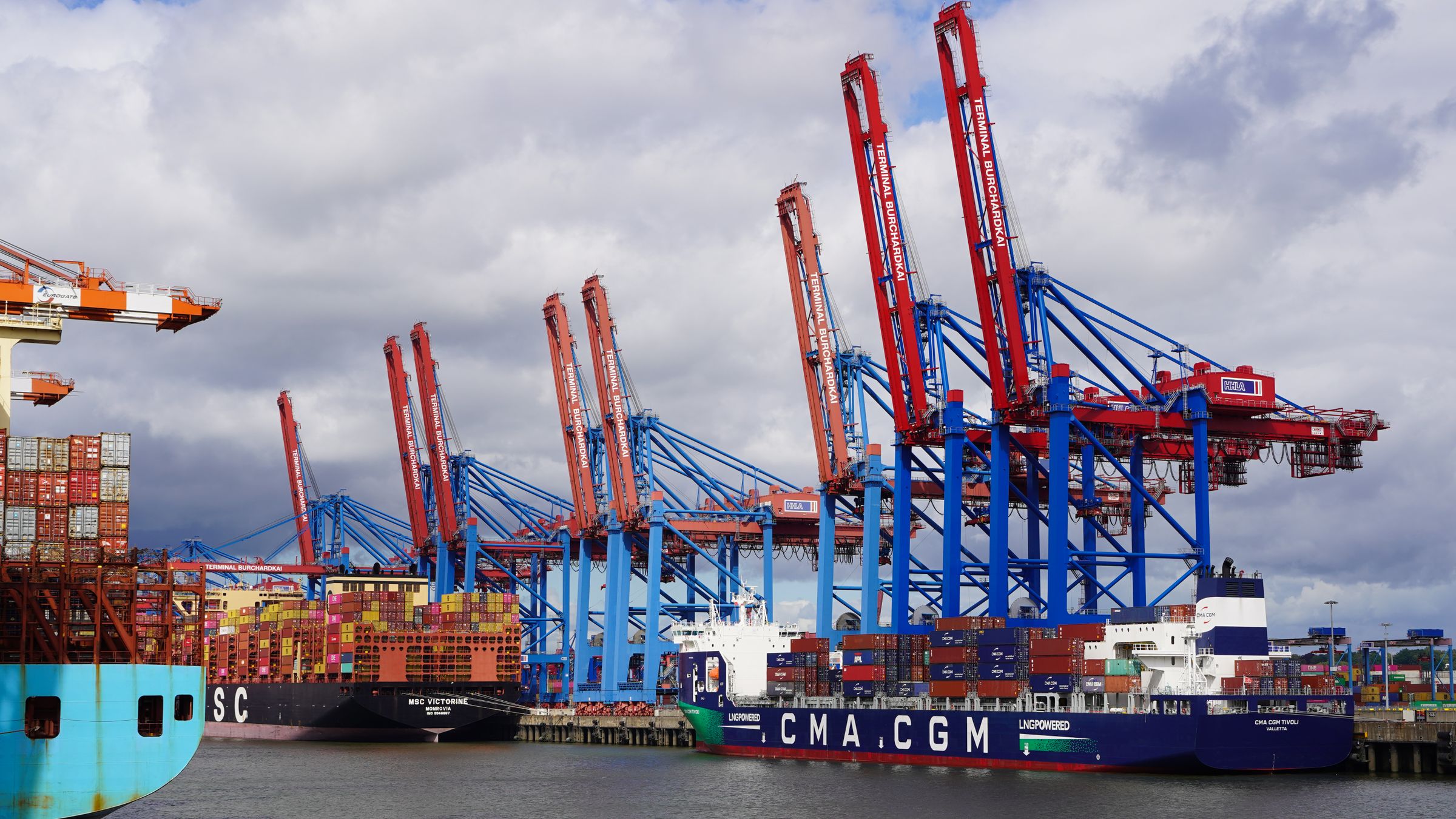
Retailers have just put a number on this holiday season, and it is bigger than many shippers expected. It is also the most important piece of 3PL logistics news you will read before peak, because it quietly decides who gets container space, warehouse slots and on-time deliveries in December, and who does not. So what does the forecast actually say, and what should importers and online sellers do about it this week? Keep reading: the answer, and a week-by-week plan to act on it, are below.
On October 15, 2026, the National Retail Federation published its 2026 holiday forecast. The headline of this 3PL logistics news is simple: holiday retail sales are expected to grow 4.2% over 2025 and reach $1.013 trillion. In 2025, holiday sales were $972 billion, which was 3.1% above 2024. So the forecast is not only higher in dollars. It also shows faster growth than last year.
NRF defines the holiday season as November 1 through December 31. Its numbers exclude automobile dealers, gasoline stations and restaurants, so they focus on the goods that actually move through ports, airports and warehouses. That makes the forecast especially useful 3PL logistics news for anyone who imports, stores or ships consumer products.
The second number in the release is about people. Retailers expect to hire between 325,000 and 375,000 seasonal workers, compared with an estimated 356,000 last year. Hiring plans are a good reality check. Companies do not add hundreds of thousands of temporary workers unless they expect the orders to arrive.
You can follow NRF’s season-long coverage on its winter holidays data page. We will refer back to these figures throughout the series, because they shape almost every logistics decision you make in the next eight weeks.
A retail forecast describes what consumers will buy. Logistics news describes how the goods get there. The two are linked by time. Most products sold in December were ordered, produced and shipped weeks or months earlier. When retailers expect a strong season, they pull inventory forward. That shows up first in ocean bookings, then in air freight for late replenishment, and finally in warehouse occupancy and last-mile volume.
In other words, by the time a forecast becomes 3PL logistics news, the supply chain is already reacting to it. The question for a small or mid-sized importer is not whether peak season will be busy. The question is whether your freight will get a fair share of the capacity that remains.
A 4.2% increase sounds modest in a headline of 3PL logistics news. In logistics, though, small percentage changes create large operational effects, because capacity does not grow at the same speed as demand. A warehouse does not add 4.2% more racks in November. An airline does not add 4.2% more belly space on the routes you need. When demand rises faster than capacity, the result is longer lead times, higher spot rates and stricter cut-offs.
For goods coming by sea, the holiday window started months ago. Containers that arrive at a U.S. port in late November still need time for discharge, customs clearance, drayage and receiving at the warehouse. If your cargo is still at origin today, you should plan for it to support January sales and returns season rather than Christmas.
That does not mean ocean freight is irrelevant now. It means you should look at your ocean bookings for the next quarter. Many importers use the holiday period to secure space and rates for the first months of the new year, when Lunar New Year production breaks often disrupt Asian supply.
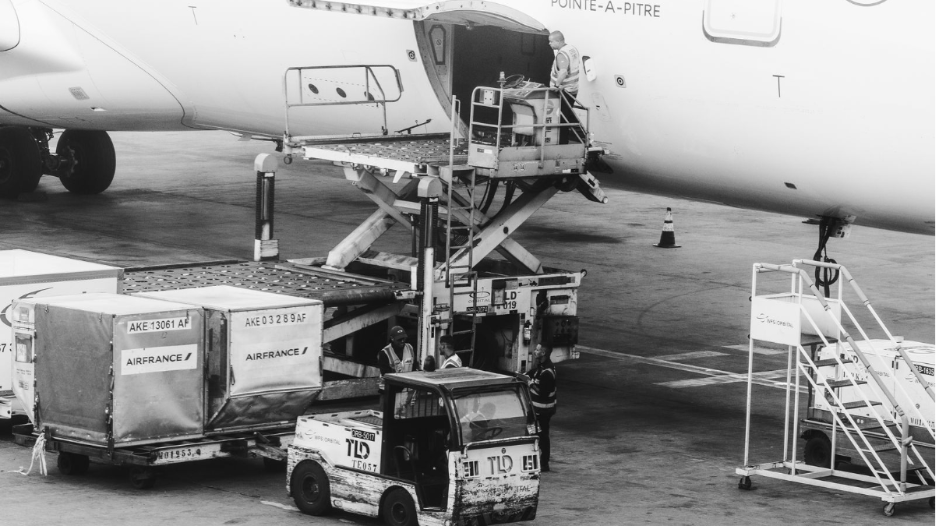
When ocean timelines are too long, importers turn to air. That is why air cargo demand usually rises sharply in November and December. Miami International Airport is a good example of how much cargo moves by air in this region: in 2025 it handled nearly 3.5 million tons of cargo, up 13.6%, and it is the busiest U.S. airport for international freight. When demand peaks, that capacity fills quickly.
If you expect to need air freight for late replenishment, talk to your forwarder now. Ask about space allocation, weight breaks and the latest booking date that still meets your sales calendar. Air rates during peak are often quoted for short validity periods, so plan to confirm quickly.
Warehouse space is often the first thing to run out. Retailers and online sellers read the same 3PL logistics news and bring inventory in early to protect themselves against delays, and that inventory needs somewhere to sit. If you rely on a 3PL warehouse, ask three questions this week:
We explain how a 3PL warehouse works, and what to look for in one in Miami, in our 3PL warehouse in Miami guide later this week.
A cut-off is the last moment a shipment can enter a process and still meet a promised date. Carriers, airlines, warehouses and customs brokers all have their own cut-offs, and during peak they move earlier. Thanksgiving week (Thursday, November 26, 2026) and the two weeks before Christmas are the most sensitive periods, because many offices close or run reduced hours.
Build a single cut-off calendar for your business. Put every relevant date in one place: last ocean booking, last air booking, warehouse receiving cut-off, last pick-and-pack date for standard shipping, last date for express shipping and the first day operations resume after each holiday. Share that calendar with your sales team, so customer promises match operational reality.

The best way to turn 3PL logistics news into action is a calendar. Use this plan as a starting point and adapt the dates to your own lanes and products.
Returns deserve special attention. After a strong season, a strong returns season follows. We will publish a guide to reverse logistics at the end of the month.
A third-party logistics provider, or 3PL, is a company that runs logistics work for you: receiving, storage, order fulfillment, freight coordination and sometimes customs paperwork. During peak, the main advantage of a 3PL is flexibility. You use more space and labor when you need it, and less when volume falls, without signing a long lease or hiring and training temporary staff.
A 3PL also spreads the cost of equipment and systems across many clients. That gives smaller companies access to warehouse management software, barcode scanning, dimensioning and carrier integrations that would be expensive to build alone. If you are new to the concept, start with our guide 3PL, 4PL and 5PL: what is the difference?
Clear answers to these questions are worth more than a low rate. A cheap provider that runs out of space in December can cost you far more in lost sales.
Peak season is also a cash flow season, and 3PL logistics news rarely says so. When you bring inventory in early, you pay for goods, freight, duties and storage before the sales arrive. A strong forecast increases that gap, because companies order more and order earlier. This part of the 3PL logistics news is easy to miss, yet it is often the reason small importers struggle in December even when sales are good.
There are three practical ways to manage the gap:
Ask your logistics partner for a simple landed cost estimate per product before cargo ships. It does not need to be perfect. It only needs to be good enough to show which products still make money after freight, duties and storage.
National 3PL logistics news hides regional differences. For companies that move goods between the United States and Latin America, the picture has a few extra layers.
Cargo arriving in Miami for U.S. distribution follows the national pattern: early ocean arrivals, air for late replenishment, and heavy warehouse use from mid-November. South Florida also serves a large population of online sellers who ship nationwide, so local fulfillment capacity tends to tighten in the same weeks.
Exports follow a different rhythm. Latin American buyers often consolidate purchases from several U.S. suppliers in a Miami warehouse, then ship one consolidated load south. In peak season, that consolidation step needs more time, because suppliers deliver late and warehouses are busier. If you buy in the U.S. for a Latin American market, ask your Miami partner how many days consolidation takes in December and plan your supplier deadlines around that number.
Each market has its own year-end calendar. Brazil has a long weekend around November 20 this year and heavy year-end import activity. Colombia and Mexico both have public holidays in November. Customs rules also differ. A Miami 3PL that works these lanes every week can help you plan around each calendar.
The National Retail Federation expects U.S. holiday retail sales to grow 4.2% in November and December 2026, to $1.013 trillion. For importers and online sellers, that is a capacity signal: more containers, more air freight, more pallets in storage and less room for late decisions. The safest response is to book ocean and air space early, secure peak storage now, confirm cut-off dates with your carriers and your 3PL, and review the plan every week until January.
NRF expects U.S. holiday retail sales for November 1 to December 31, 2026, to grow 4.2% over 2025, to $1.013 trillion. Sales in 2025 were $972 billion. The forecast excludes automobile dealers, gasoline stations and restaurants.
NRF expects retailers to hire between 325,000 and 375,000 seasonal workers for the 2026 holiday season, compared with an estimated 356,000 in 2025.
As early as possible, and the 3PL logistics news this season supports that advice. For ocean freight, holiday cargo should already be moving. For air freight and domestic distribution, book now and confirm the last booking dates with your forwarder. Treat Thanksgiving week and the two weeks before Christmas as high-risk periods.
A 3PL gives you flexible warehouse space, trained labor, fulfillment systems and carrier relationships without long-term commitments. When 3PL logistics news points to a busy season, that flexibility lets you handle higher volume and then scale back in January.
For reliable 3PL logistics news, start with primary sources: trade associations such as NRF, port and airport statistics, and government trade agencies. Our Trade Pulse series on this blog summarizes those sources and explains what they mean for importers and online sellers.
Ready to ship?
Need a quote for your next shipment?
Tell us what you are shipping and our Miami team will get back to you with a quote.
Retailers have just put a number on this holiday season, […]

A technical guide to managing heavy machinery imports using RoRo shipping via PortMiami efficiently.